Our program – Applied Audio Recording – has helped our grads find careers in:
Live sound – Radio – Theatre – Postproduction – Music publishing- TV- Concert productions- Composing- Jingle Productions
Our 30-week diploma course combines at least 200 hours of actual recording time, 150 hours of Studio Lab time and
130 hours of theoretical workshops.
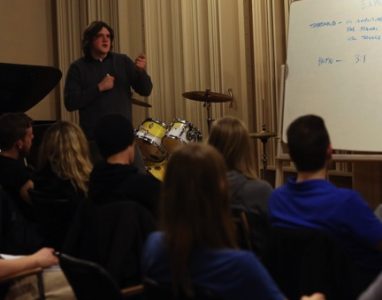
We use top session musicians, lectures from industry guests, field trips and more to ensure that each TARA grad has a firm grasp of the skills needed to succeed in the audio world.
Our course, is approved by the Ministry of Training Colleges and Universities as a vocational program under the Private Career Colleges Act, 2005, It is designed to give you hands on experience working in Studio with weekly topics taking you from the basics to the professional. Weekly topics include but are not limited to:
-
» OrientationAn introduction to the course giving you some basics before we get into depth on each subject. It includes:
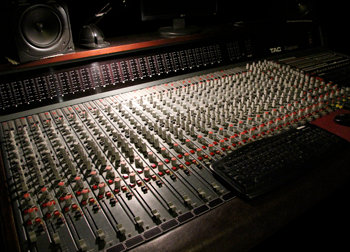
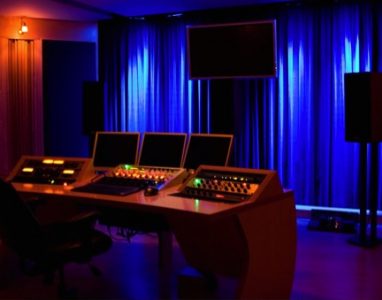
• An introduction to a Studio - control rooms, consoles, microphones, connectors.
• The theory of sound waves, propagation and acoustics
• Basic microphone techniques
• The tracking loop
• Tracking, levels and headphone mixes
• Signal Flow
• Multi-track recording and mixing
• Session pre-production and organization
• An introduction to Protools -
» Signal FlowAn analysis of the electrical path a signal must follow in order to satisfy the requirements of different sessions.
-
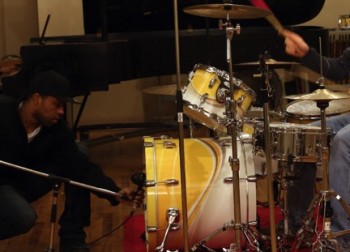
» DrumsThis popular subject module features a professional session drummer in an informal yet highly informative discussion/demonstration on the tuning, microphone choice and placement and recording of modern drum kits.
-
» Bass/GuitarThe influence of the bass and guitar sounds in modern music is enormous.
Professional session musicians demonstrate all of the standard combinations used. You will get to examine the various instruments used for popular rock, classical, and jazz music learn the combinations normally used in the recording process. You will explore microphone choice and placement for both acoustic and electric guitar. -
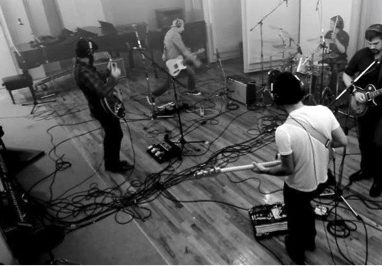
» Rhythm SectionAt this point in the program we introduce you to a typical band setup of drums bass and guitar.
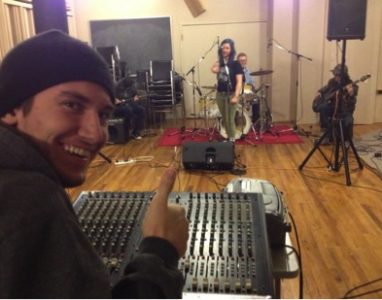
Students witness typical interaction and time constraints particular to the high-pressure environment of session musicians and practice these skills when recording a real band during class time. -
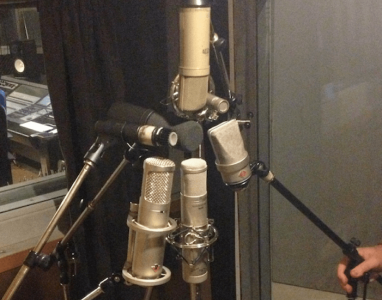
» Advanced Microphone TechniquesThis where you start to explore more sophisticated microphone techniques, expanding on the knowledge you have gained to that point.
Subjects include Binaural, X-Y, MS and PZM configurations. -
» Reverbs, Time Delay Techniques, Compressors, Expanders, Gates and De-essers…etc.Here you will examine the development of artificial Reverberation from humble beginnings to the present sophisticated digitized technology. This technique makes it feasible to simulate environments from actual concert halls to unusual acoustic spaces…
The reason for and effect of using a gates and expanders is discussed. You will also examine time delay techniques including phasing, flanging and echo. -
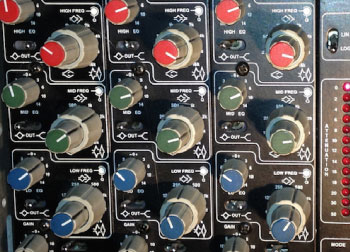
» EQHere you will get an in depth look at equalization, the benefits and drawbacks. The use of, and differences between Peaking, Shelving, High Pass, Low Pass, Parametric and Graphic are discussed.
The parameters and effect of Q, Bandwidth, Gain, Center Frequency, and Cutoff Frequency are presented. -
» MIDI/SequencingIt would be an understatement to say the introduction of the MUSICAL INSTRUMENT DIGITIAL INTERFACE has revolutionized the face of today’s music. The simple concept of a common language for electronic instruments and related equipment quickly opened immense possibility regarding composition, performance, signal manipulation and editing. You will learn computer based sequencing as it relates to music composition and be introduced to Logic, another software commonly used in the industry.
-
» MasteringA professional mastering engineer explains this complex treatment of the final mixed product. The process of executing specific mastering skills is explored. Loudness, frequency response and stereo spread are particular focuses. Students then discuss various aspects in class and work through the concepts of basic mastering.
-
» Music Business SeminarYou will gain insight into the music business through a lecture series featuring speakers from such agencies as- SOCAN, EMI Music Publishing, FACTOR, Universal music, 604 Records, The Pilot Agency, HMV etc.
The series throughout the year will allow you to gain a greater grasp of the administrative side of the audio industry with respect to copyright, royalties, the structure and role of major and independent labels, the importance of publishing and how to find financing for projects through various agencies. -
» Live SoundYou will be taught by professionals working in the industry at venues in Ottawa and Toronto or on the road with bands. Topics covered include acoustics, gear set up, room tuning, feedback, monitoring for various venues and tools every live sound engineer should own.
-
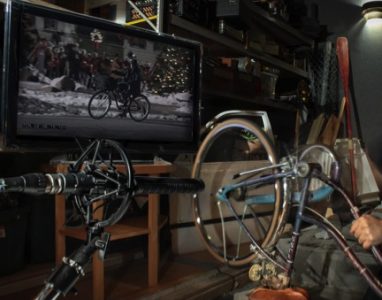
» Foley/ADR/Sound-for-FilmYou will recreate sound effects (Foley), dialogue (ADR) and sound design in sync with original visual footage. Learn about time code and applying common foley techniques. You will use these skills in a class project, recreating the complete sound track for a piece of film.